- Resources

- About




Solar
There are four main components to a home solar energy system: solar panels, inverters, monitoring system, and the new utility net meter. When the sun is out, your solar panels produce electricity in the form of DC current. Your house runs on AC current, so an inverter or many micro-inverters are used to convert your solar DC current into useable AC current. When your new solar panels are installed, your utility provider will also install a new bi-directional meter. This new meter tracks how much electricity you over-produce and send back to the grid as well as how much electricity you consume from the grid at nighttime. The monitoring system connects to your home’s Wi-Fi and Internet connection to let you and SolarMax know the health of your solar energy system.
In general, if you are already able to afford your electric bill then you can afford to go solar. If you have average credit rating or better then you may qualify for a $0 down solar loan or solar lease. Even if you have bad credit there are options like the HERO program where you can use the equity in your home as collateral.
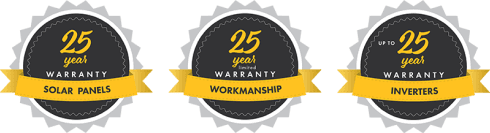
Solar energy is cheap energy. It has the lowest levelized cost of energy (LCOE) of any form of energy we generate. The upfront costs are higher than other options, but whether you are financing, leasing, or buying outright, having solar panels will always be less expensive than paying your utility provider for electricity for the next 25 years. Our solar panels have a 25-year manufacturer warranty, and many continue generating clean energy well beyond 30 years, so they will pay for themselves and save you money for years before needing to be replaced.
Financing
Some people have the money to buy their solar energy system all at once. These people typically look at their solar panel purchase as an investment. If you were to pay cash for your solar panels, it typically takes about six or seven years to see a return on your investment. In other words after six or seven years, you’ve saved enough money by not paying your utility company for electricity that you now have recouped the cost of your system in electricity savings. From here on out, you are generating free electricity and, for the average solar owner, saving hundreds of dollars a month.
Not everyone has the money to buy their solar system upfront and would prefer to buy their panels with no down payment. Also, many people are just looking for some immediate monthly energy savings and they want protection from constantly rising utility rates. In this case you could easily benefit from financing the purchase of your solar panels.
For homeowners who do not want to do a credit check or have an additional loan count against their debt-to-income ratio, then PACE financing may be a good choice. SolarMax is partnered with CaliforniaFIRST to provide PACE financing. PACE stands for Property Assessed Clean Energy. PACE is different than a traditional loan based on your credit. PACE is structured like a tax assessment on your property. Rather than paying monthly payments to a lender, you pay your installments through your property tax bill.
Some reasons homeowners choose PACE:
1)The homeowner is only paying on tax assessment and can write off interest payments (similar to mortgage interest).
2)The loan does not show up on a credit report and therefore is not calculated in the homeowner’s debt-to-income ratio.
3)No hard pull on your credit report is done, just a soft pull which does not affect your credit score.
4)Repayment terms can be anywhere from 5 years to 30 years.
Battery
At SolarMax you can buy a battery to go along with your solar energy system. Depending on the brand, that battery can be used as a backup power source during blackouts and/or used to store excess energy produced by your panels during the day to be used at night.
No. For safety reasons, power utilities do not allow solar panel energy to keep flowing and feeding the grid during a blackout. To keep your house powered without interruption during a blackout you’ll need a battery backup.
Maybe. Some utilities are converting their customers to Time of Use billing. In Time of Use billing you are charged higher rates for your electricity during times of the day when the demand for electricity is highest. The most expensive time is in the evening. The problem with Time of Use and solar is that when you are producing solar energy during the day, you are being credited a lower amount than when you go to pull back your energy from the grid in the evening at a higher rate. A battery used for energy storage will be charged by your solar panels during the day and then you can consume that energy at night instead of paying the higher electrical costs imposed by your utility.
This scenario sounds like you need energy storage if you are on Time of Use. The only problem is that currently (2019) the cost of an energy storage battery is probably going to be more expensive to buy than the energy savings you get using the battery. But over time utility rates will rise and battery technology will keep improving. We will probably see the price of energy go up and the cost of home batteries go down enough in the next 5 years where using a battery for energy storage might begin to make financial sense.